June 14, 2026 • Daniel Sato • 9 min reading time • Specs verified June 24, 2026
Router Planes and Specialty Hand Planes: The Joinery Tools Finish Carpenters Actually Reach For
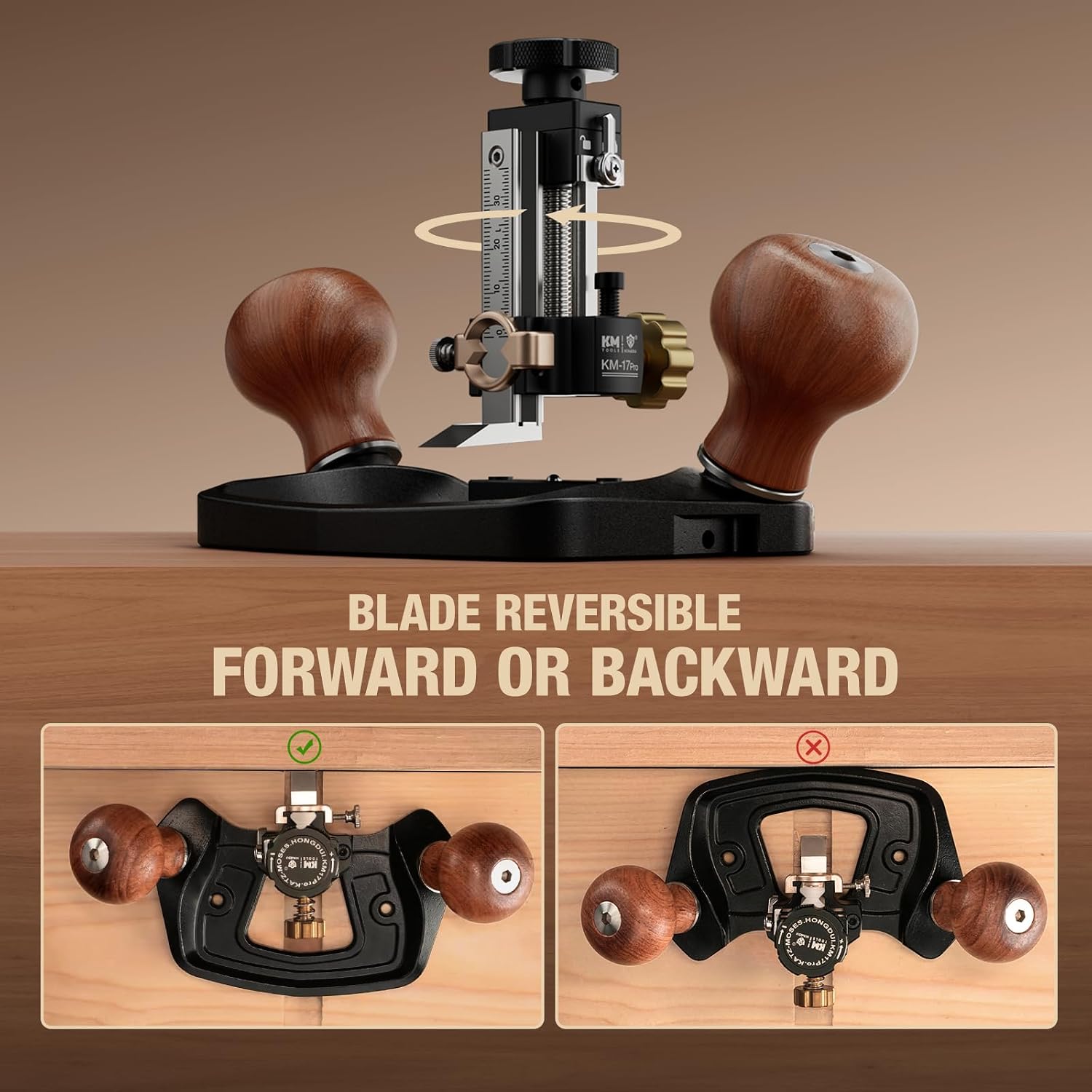
There’s a moment in almost every woodworking project where a power tool becomes the wrong answer. You’re fitting a hinge mortise — a shallow, flat-bottomed recess cut into the edge of a door — and the router left the floor just slightly uneven. Or you’re fitting a tenon (a projecting tongue of wood that slides into a matching slot called a mortise) and it’s a hair too thick on one side. This is where hand planes designed for joinery earn their keep. Unlike a bench plane, which flattens broad surfaces, joinery planes work in tight spaces, reference off an existing surface, and give you feedback the moment you overshoot. This guide covers the router plane and several close relatives — the tools finish carpenters, furniture makers, and serious hobbyists reach for when precision matters more than speed. We’ll walk through what each tool actually does, name the tradeoffs between price tiers, and give you a clear decision framework before you spend.
What a Router Plane Actually Does (and Why It’s Not Like a Power Router)
The name causes genuine confusion. A router plane — sometimes called a “old woman’s tooth” in antique tool catalogs — has nothing to do with the spinning-bit power router in your shop. It’s a hand tool with a flat, open sole (the bottom face of the plane body) and a vertically mounted blade that drops down through a central throat. You set the blade depth, register the flat sole against the surrounding wood surface, and push or pull the tool across a recessed area. The blade shaves material from the floor of that recess until it’s perfectly flat and parallel to the reference surface.
In practical terms, a router plane is how you:
- True up hinge mortises after chiseling or routing — it brings the floor dead flat so the hinge leaf seats without rocking.
- Fit tenon shoulders to a precise depth when making mortise-and-tenon joints.
- Clean up dadoes and grooves — the long channels cut across or along a board’s grain to accept shelves or cabinet backs.
- Flush-fit inlay work, where a blade set to the exact depth of your inlay pocket guarantees a level field.
Fine Woodworking’s hand plane coverage consistently flags the router plane as the single most-overlooked joinery tool in a beginner’s kit — more useful, they argue, than a second bench plane in most furniture workflows. Popular Woodworking echoes this, noting that experienced furniture makers often describe the router plane as the tool that “closes the gap” between a good joint and a great one.
The Premium vs. Entry-Level Decision: Where the Price Gap Actually Lives
The Numbers At a Glance
| Tool | Entry-Level Range | Premium Range |
|---|---|---|
| Router plane (large, ¾” blade) | $45–$80 | $175–$250 |
| Shoulder plane | $60–$120 | $200–$350 |
| Rabbet / rebate plane | $50–$100 | $180–$320 |
| Combination plane | $90–$150 | $350–$600+ |
Prices reflect 2026 U.S. retail from authorized premium-channel retailers.
The gap isn’t purely about prestige. Across published reviews and aggregated owner feedback, three design differences reliably separate the price tiers:
1. Sole flatness and casting quality. A router plane’s sole must be flat — that’s the reference surface your work depends on. Entry-level cast-iron bodies (think Sears-era Stanley 71 reissues or current import clones) often require lapping (grinding flat on an abrasive surface) before they’re accurate enough for fine work. Premium bodies from Lie-Nielsen or Veritas arrive flat within a few thousandths of an inch from the factory. Owners in long-run forum discussions on popular woodworking communities consistently report that Lie-Nielsen’s large router plane (the No. 71 interpretation) needed no sole work out of the box. That matters because lapping a complex casting is a skill — and a time commitment that costs real money if you value your shop hours.
2. Blade steel and edge retention. Router plane blades are under significant lateral stress as they pare across a groove floor. Entry-level blades in O1 or mild steel dull faster and sometimes chatter in harder domestic hardwoods like hard maple or white oak. Veritas publishes the steel specs for their router plane blades (PM-V11, a proprietary powder-metallurgy alloy) and owners report noticeably longer intervals between sharpenings compared to standard O1 blades, per Popular Woodworking’s PM-V11 coverage. Lie-Nielsen uses A2 tool steel — still well above entry level, with good toughness and respectable edge life in production use.
3. Depth-adjustment mechanism. Budget router planes often use a simple collar-and-set-screw depth stop. It works, but micro-adjustments are frustrating. Premium tools use threaded adjusters or cam locks that let you sneak up on a final depth in 0.001”–0.003” increments. For hinge mortises on a run of doors — where you’re repeating the same depth setting forty times — this is a commercial decision, not a luxury one.
ToolGuyd’s specialty plane coverage notes that the Veritas Large Router Plane’s depth adjuster is among the most praised mechanisms in its category, with owners citing repeatable settings as the primary reason they recommend it over competitors.
The Shoulder Plane: The Tenon Fitter’s Best Friend
If the router plane owns groove and mortise floors, the shoulder plane owns tenon cheeks and shoulders. A shoulder plane (sometimes called a rebate plane) has a blade that runs the full width of the tool body — edge to edge — so it can cut right into a corner without leaving a sliver of uncut wood. The low blade angle and tight mouth (the gap ahead of the blade) let it shave end grain cleanly, which is exactly what you need when fitting a tenon that’s 0.010” too fat.
Where finish carpenters actually use it:
- Fitting tenon shoulders flush after cutting on the table saw or bandsaw
- Cleaning up rabbets (stepped recesses along a board’s edge, used for cabinet backs and door lips)
- Trimming mitered returns to final fit on site
This Old House’s hand plane buyer’s guide recommends shoulder planes for any carpenter doing custom millwork or built-in cabinetry, specifically because the powered alternatives — trim routers, table saws — are difficult to control at the sub-millimeter scale required for tight joinery.
The premium case here is straightforward. Lie-Nielsen’s shoulder planes (available in ½”, ¾”, and 1” widths) are precision-ground, have excellent mouth adjustability, and owners consistently report them arriving ready to use with minimal tuning. The Veritas Skew Rabbet Plane adds a skewed blade geometry (the cutting edge runs at an angle rather than perpendicular to travel) that reduces tearout on figured wood — a real advantage in furniture shops working with figured cherry, walnut, or quartersawn oak.
At the entry level, the Record 311 (now manufactured under various import labels) remains functional for occasional use. But if you’re fitting tenons on a production schedule, the sloppier depth adjustment and less precise mouth opening become friction that adds up.
Specialty Planes Worth Knowing: The Combination Plane and the Scratch Stock
The Combination Plane
A combination plane is one tool body that accepts multiple blade profiles — straight, curved, beading, ogee — via an interchangeable-iron system. The Stanley 45 and 55 are the historical benchmarks; the Veritas Combination Plane is the modern premium reissue. Wood Magazine has covered the Veritas version as a legitimate successor that solved the fence (the adjustable guide rail that sets your cut distance from the board’s edge) wobble that plagued the originals.
The honest tradeoff: Combination planes reward patient setup. A professional running dadoes all day is faster with a dado stack or track saw with dado insert. The combination plane earns its keep in smaller shops making one-offs — a period furniture piece with multiple molding profiles, or a box maker needing matched grooves and beads in a single session. If that’s your work, the $400–$600 Veritas combination plane amortizes well. If it isn’t, a dedicated plow plane (a narrower tool optimized for grooves and dadoes only) at $150–$250 is a smarter call.
The Scratch Stock (The $0 Specialty Plane)
Worth a mention because Fine Woodworking covers it regularly: a scratch stock is a piece of hardwood with a slotted end holding a shaped piece of card scraper steel. It cuts a single bead or cove profile. You grind or file the steel to your desired shape and push or pull it along the workpiece. Zero commercial overhead, fully custom profiles, and surprisingly effective on short runs of molding work.
It’s not a substitute for a dedicated hollows-and-rounds set or a combination plane on longer runs. But for a furniture maker adding a single beaded detail to a drawer bottom, a scratch stock built in fifteen minutes outperforms a $300 plane you’d have to set up, use once, and clean.
Decision Framework: If X, Then Y
Here’s where to land based on your actual work:
If you’re fitting hinges, cleaning up dadoes, or truing tenon shoulders more than twice a month: Buy a premium router plane first — Lie-Nielsen No. 271 (small) or the large version, or Veritas Large Router Plane. Either will outlast you. Buy from an authorized retailer like Highland Woodworking, Tool Nut, or Acme Tools to guarantee genuine tooling and return support. The counterfeit and gray-market risk on Lie-Nielsen is low but real enough on secondary markets to matter.
If you’re fitting tenons and rabbets in production: Add a shoulder plane. Lie-Nielsen’s ¾” shoulder plane covers 90% of cabinet and furniture work. Go up to the 1” if you’re regularly fitting wide tenons on architectural millwork.
If you want profiling capability (beads, ogees, dadoes in one tool): The Veritas Combination Plane is the defensible premium choice based on published reviews and owner feedback. Budget realistically for a half-day of initial setup time — that’s not a flaw, it’s how combination planes work.
If you’re still in entry-level territory and testing the waters: A used Stanley 71 (original, pre-1970s) or a current Woodriver router plane from Woodcraft gives you a real tool at $60–$80. Plan to lap the sole and sharpen the blade. You’ll learn the tool’s geometry, decide whether you reach for it constantly, and then you’ll know whether the Veritas or Lie-Nielsen is worth the jump.
The premium joinery plane market is one where resale value holds remarkably well — Lie-Nielsen tools from ten years ago sell at 70–85% of current retail on reputable secondary markets, per community pricing data discussed in Fine Woodworking reader forums. That’s a meaningful offset when you’re weighing a $225 purchase against an $80 alternative. Buy once, buy right, and the math usually favors the premium tool within two or three years of regular use.