April 30, 2026 • Daniel Sato • 8 min reading time • Specs verified June 24, 2026
The $30–$170 Chisel Set Landscape: Where Design Quality Jumps and Where It Doesn't
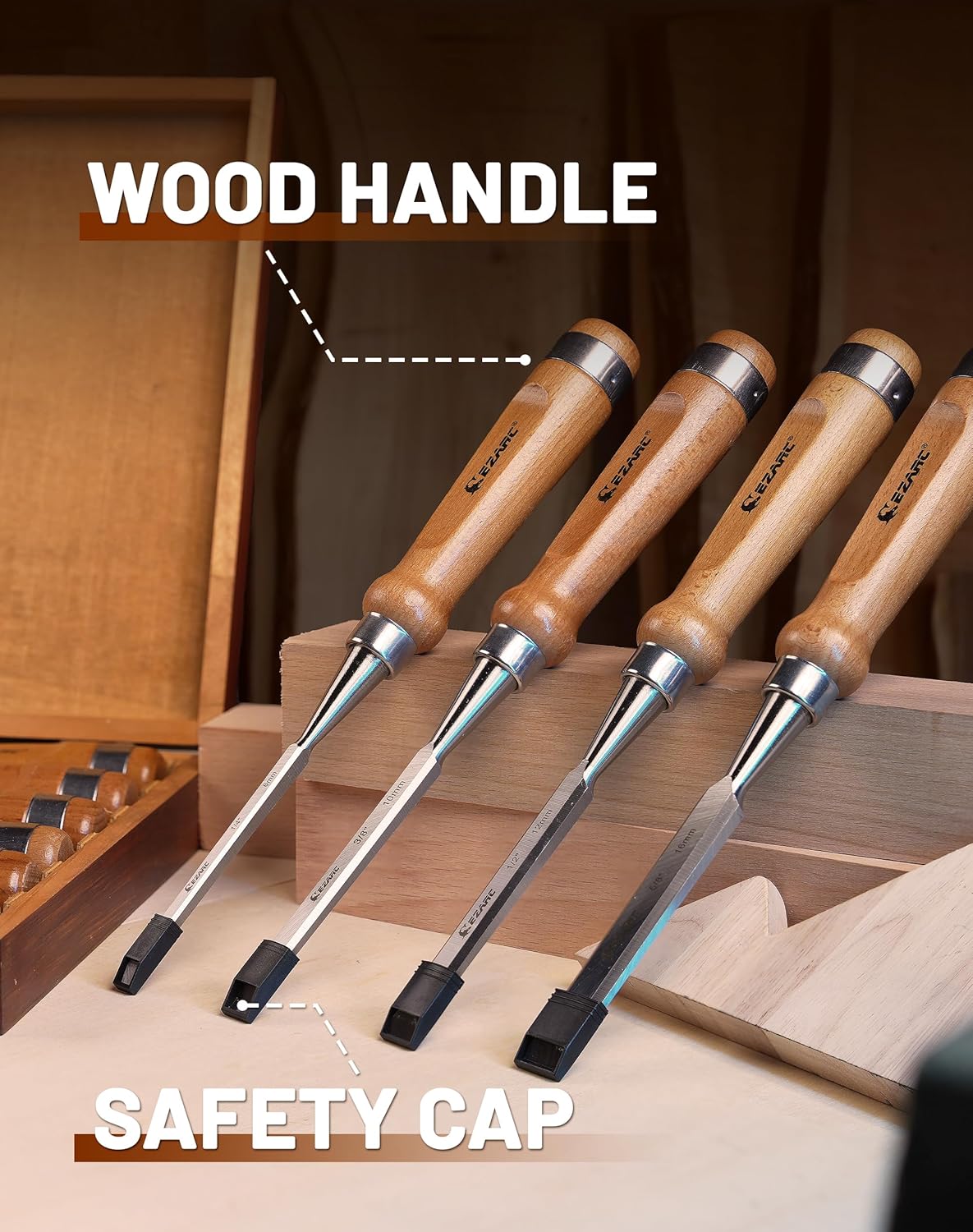
A chisel is one of the oldest cutting tools in woodworking — a flat steel blade, beveled to a sharp edge at one end, driven by hand pressure or a mallet to pare, chop, or fit joints in wood. If you’re stepping up from a hardware-store set or buying your first serious set for a workbench or cabinet shop, the range between $30 and $170 can feel genuinely confusing. There are dozens of options, the packaging looks similar, and the word “professional” gets printed on boxes that have no business using it. This guide cuts through that. We’ll show you exactly where real design improvements show up as you climb the price ladder — and where the jumps are mostly marketing. By the end, you’ll have a clear decision frame: which tier fits your actual work, and where the sweet spot is right now in mid-2026.
| EDITOR'S PICK[Kirschen 1101000 6-Piece Chisel](https://www.amazon.com/dp/B00029LIFA?tag=greenflower20-20)… | Mid-tier[IRWIN Marples Chisel Set with W](https://www.amazon.com/dp/B00ABC29J2?tag=greenflower20-20)… | Budget pick[Narex Bevel Edge Chisel Set wit](https://www.amazon.com/dp/B00GPC74ZQ?tag=greenflower20-20)… | |
|---|---|---|---|
| Pieces | 6 | 5 | 4 |
| Storage | Wood Box | Wallet | — |
| Handle Material | — | High-Impact | Wooden |
| Edge Type | — | — | Bevel Edge |
| Price | $170.00 | $91.19 | $49.00 |
| See on Amazon → | See on Amazon → | See on Amazon → |
What the $30–$60 Range Actually Gets You
Let’s be direct: the sub-$60 chisel set has a role, but it’s a narrow one. The dominant design compromise in this tier is steel selection. Most sets here use a chrome-vanadium (Cr-V) alloy or a low-carbon steel that’s been surface hardened — processes that keep manufacturing costs low but result in an edge that dulls faster under hard use and, more importantly, chips rather than rolls when it meets something unexpected. Across aggregated owner reviews on woodworking forums and retail platforms, the complaint pattern is consistent: these chisels sharpen up reasonably well out of the box, but they don’t hold that edge through a full work session.
The handles in this range are typically injection-molded plastic or a budget hornbeam that’s been attached without much care to the socket or tang geometry. Wirecutter’s chisel review notes that handle-to-blade fit is one of the first things that degrades with impact use — and at this price, most manufacturers aren’t spending money on that interface.
Where they make sense: A set of sub-$60 chisels is legitimate as a site-use kit you don’t mind losing on a job, a learner’s set for someone just starting to develop sharpening habits, or a dedicated set for rough work like chopping mortises in construction lumber where edge retention isn’t critical.
Where they don’t: If you’re fitting dovetails, paring tenon shoulders, or doing any finish work where the chisel is making the final cut on a visible surface, this tier will cost you time. You’ll resharpen more, and a chipped edge mid-cut on a walnut drawer front is an expensive moment.
The $60–$110 Range: Where Design Decisions Start Mattering
This is the tier where manufacturers have to make real choices, and those choices separate the contenders from the filler.
Steel hardness and heat treatment are the load-bearing variables here. A chisel’s Rockwell hardness (Rc) — a standardized measure of how resistant a steel surface is to deformation — tells you a lot about how a blade will behave at the edge. Published spec sheets put most quality mid-range chisels in the Rc 58–62 range. Below Rc 58 and you’re likely looking at a tool that softens under sustained mallet work. Above Rc 63 and you risk brittleness — the edge cracks rather than wears.
Narex chisels, made in the Czech Republic and widely stocked at Tool Nut and Highland Woodworking, sit comfortably in this tier. Published specifications put their chrome-manganese steel at around Rc 59–61 depending on the series. Popular Woodworking’s buying guide has consistently pointed to Narex as the best value entry into “real” chisel performance — the geometry is clean, the backs come reasonably flat from the factory (which matters enormously for accurate paring), and the hornbeam handles are properly fitted. Owners consistently report that a few minutes of back-flattening on a sharpening stone is all that’s needed before first use.
The Two Cherries line (made in Solingen, Germany) also occupies this range for sets. Tool Nut’s published descriptions note the carbon steel hardened to approximately Rc 60, with a traditional octagonal boxwood handle that’s become something of a benchmark for grip comfort in this category. The octagonal shape isn’t decorative — it resists rolling off a bench and indexes naturally in the hand, so your cuts are more consistent.
By the numbers:
| Tier | Typical Steel | Rc Range | Back Flatness Out-of-Box | Handle Fit |
|---|---|---|---|---|
| $30–$60 | Cr-V / low carbon | 55–58 | Often needs significant work | Loose or glued |
| $60–$110 | Chrome-manganese / carbon | 58–61 | Minor lapping needed | Fitted, stable |
| $110–$170 | O1 / A2 / PM-V11 | 60–64 | Near-flat, minimal prep | Precision fitted |
The $110–$170 Range: When the Premium Is Justified
At $110 and above for a set, you’re entering the territory where the manufacturing tolerance tightens and the steel choice becomes a real editorial decision by the brand — not just a cost reduction. This is also where you start encountering American and British makers whose production volumes are low enough that quality control is a genuine differentiator.
Ashley Iles chisels, made in England, have a strong reputation in the Fine Woodworking community for edge retention and handle quality. Fine Woodworking’s bench chisel reviews have noted that the Iles geometry — particularly the primary bevel angle and the secondary micro-bevel behavior under sharpening — is optimized for hand paring rather than mallet chopping, which is exactly the right design decision for finish work.
Lie-Nielsen produces bench chisels in A2 tool steel, hardened to approximately Rc 60–62. A2 is an air-hardening steel with higher alloy content than simple O1 carbon steel; the trade-off, well-documented in the Highland Woodworking catalog’s steel selection notes, is that A2 takes slightly more effort to sharpen to a mirror polish but holds that edge substantially longer through production work. If you’re at a bench cutting dozens of mortise fits in a cabinet run, the sharpening intervals matter commercially. Owners in long-form reviews consistently describe A2 chisels as the tool that “changes how often you reach for the strop.”
Veritas (Lee Valley’s premium brand) offers sets in PM-V11, a powder-metallurgy steel developed specifically for edge tools. Published specifications put PM-V11 at approximately Rc 61–63, with a carbide distribution that results in finer, more consistent edge geometry than traditional alloy steels. Popular Woodworking has described PM-V11 as the clearest argument for the top of this price range if edge retention under sustained use is your primary criterion.
What’s notable at this tier is that the handle design also reflects intentional ergonomic thinking. Lie-Nielsen’s handles use cherry wood turned to a specific diameter that the company has refined over decades of production feedback. Veritas handles are designed with a wider bolster — the metal collar between handle and blade — that distributes mallet strikes more evenly. These aren’t small details. If you’re using a chisel for three hours in a cabinet shop session, grip fatigue and impact transfer matter.
Where the $110–$170 set is justified:
- You’re producing finished work regularly (furniture, cabinetry, millwork) and sharpening time is a real cost
- You’re planning to keep this set for ten or more years — the resale value on Lie-Nielsen and Veritas holds well compared to mid-range sets
- You’re moving from a beginner set and want to stop questioning whether it’s the tool or the technique
Where it may not be:
- You’re still developing sharpening fundamentals — a premium chisel won’t compensate for poor technique, and you’ll see more return from sharpening practice with a good mid-range set first
- Your primary work is rough construction or site carpentry where a sub-$80 set does the same job
Where the Design Jumps Are Real vs. Where They’re Marketing
Here’s the honest map, based on aggregated review patterns and published specs:
Real design jumps:
- $30 → $75: Steel hardness, heat treatment consistency, handle-to-blade fit. This is the most meaningful jump in the range. You get a tool that actually holds an edge through a work session.
- $75 → $130+: Back flatness from the factory, handle ergonomics, steel alloy quality (O1 vs A2 vs PM-V11). The returns are real but require more sharpening skill to access — you need to be able to sharpen accurately to appreciate the edge retention of A2 over chrome-manganese.
Where the jump is mostly marketing:
- Brand prestige within the $60–$110 range: Several brands in this window sell on heritage and packaging. Check published Rc ratings and owner feedback on back flatness before buying name recognition.
- “Professional grade” language on $40–$60 sets: This descriptor is unregulated and appears on sets whose specs don’t support it. Ignore it; look at steel type and Rockwell rating instead.
- Set count inflation: A 10-piece set at $70 is almost always worse than a 4-piece set at the same price. More chisels in the box means less money per chisel. For most woodworking, a 1/4”, 1/2”, 3/4”, and 1” set covers 90% of work.
The Decision Frame
If you’re an intermediate practitioner deciding right now:
If you’re fitting dovetails and mortises on furniture or cabinet work, and you sharpen consistently: The $75–$110 range — Narex Premium or Two Cherries — is the correct first serious investment. It’s where design quality clears the bar for finish work without requiring you to spend beyond what your current skill level can differentiate.
If you’re in production cabinet work or making this a long-term tool: Move to the $130–$170 range and spec Lie-Nielsen or Veritas. The edge retention math favors it over a multi-year horizon, and the resale value is real — Lie-Nielsen chisels hold roughly 60–70% of retail on the used market, per pricing patterns observed at Highland Woodworking and Tool Nut listings.
If you’re still building sharpening fundamentals: Don’t spend above $80 yet. Get a Narex set, flatten the backs, and learn to hold a consistent angle. When your edge geometry is clean and repeatable, you’ll know exactly why the premium steel matters — and you’ll be ready to use it.
The $30–$170 landscape isn’t a mystery once you know what to look for. Steel hardness, back geometry, and handle fit are doing the real work here. Everything else is packaging.