May 4, 2026 • Daniel Sato • 10 min reading time • Specs verified June 24, 2026
Japanese Kanna vs. Western Block Planes: A Design-Literate Comparison for the Serious Shop
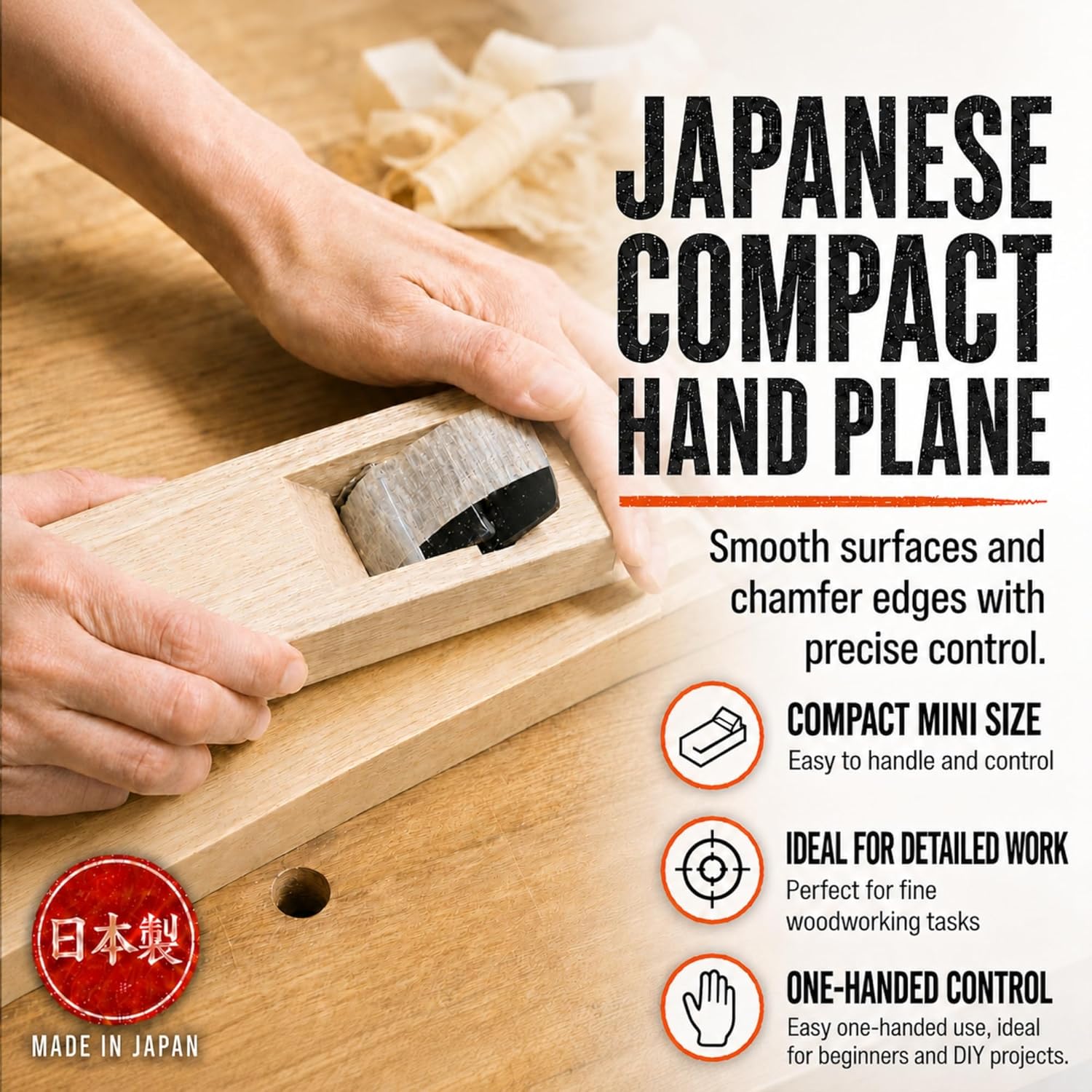
If you’ve ever watched a finish carpenter drop a hand plane over the end grain of a cabinet door and take a whisper-thin shaving without even looking down, you’ve seen the payoff of a well-tuned tool in practiced hands. A hand plane is essentially a very precisely controlled chisel held at a fixed angle inside a body — called a plane body or stock — that rides along the wood surface. The blade, called an iron, slices a curl of wood as you push or pull the plane across the grain. That’s the whole mechanism. What separates a $40 hardware-store block plane from a $300 Lie-Nielsen or a $250 Japanese kanna (the Japanese word for a wooden-body hand plane) is everything else: the steel, the geometry, the way the tool fits your hand, and how it behaves when you’re trying to split the difference between “almost flat” and “actually flat.”
This article is for the woodworker who already knows roughly what a hand plane does and is now trying to make an informed buying decision between two design traditions that look, feel, and behave very differently. We’ll break down the geometry, the steel science, the ergonomics, and the practical tradeoffs — and close with a clear decision framework you can use before you spend $200–$600 on a precision instrument you’ll use every day.
| EDITOR'S PICK[KAKURI Japanese Block Plane Lar…](https://www.amazon.com/dp/B00UD1M5I6?tag=greenflower20-20) | Mid-tier[KAKURI Japanese Hand Plane 42mm…](https://www.amazon.com/dp/B000ALF4GO?tag=greenflower20-20) | Budget pick[Japanese Wood Block Plane KANNA…](https://www.amazon.com/dp/B0026FBGR8?tag=greenflower20-20) | |
|---|---|---|---|
| Blade width | 60mm | 42mm | 40mm |
| Overall length | 10.2" | 5.9" | — |
| Body material | White Oak | ECO Oak | — |
| Blade edge | — | — | Double Edge |
| Price | $57.44 | $23.56 | $9.99 |
| See on Amazon → | See on Amazon → | See on Amazon → |
Two Philosophies, One Job
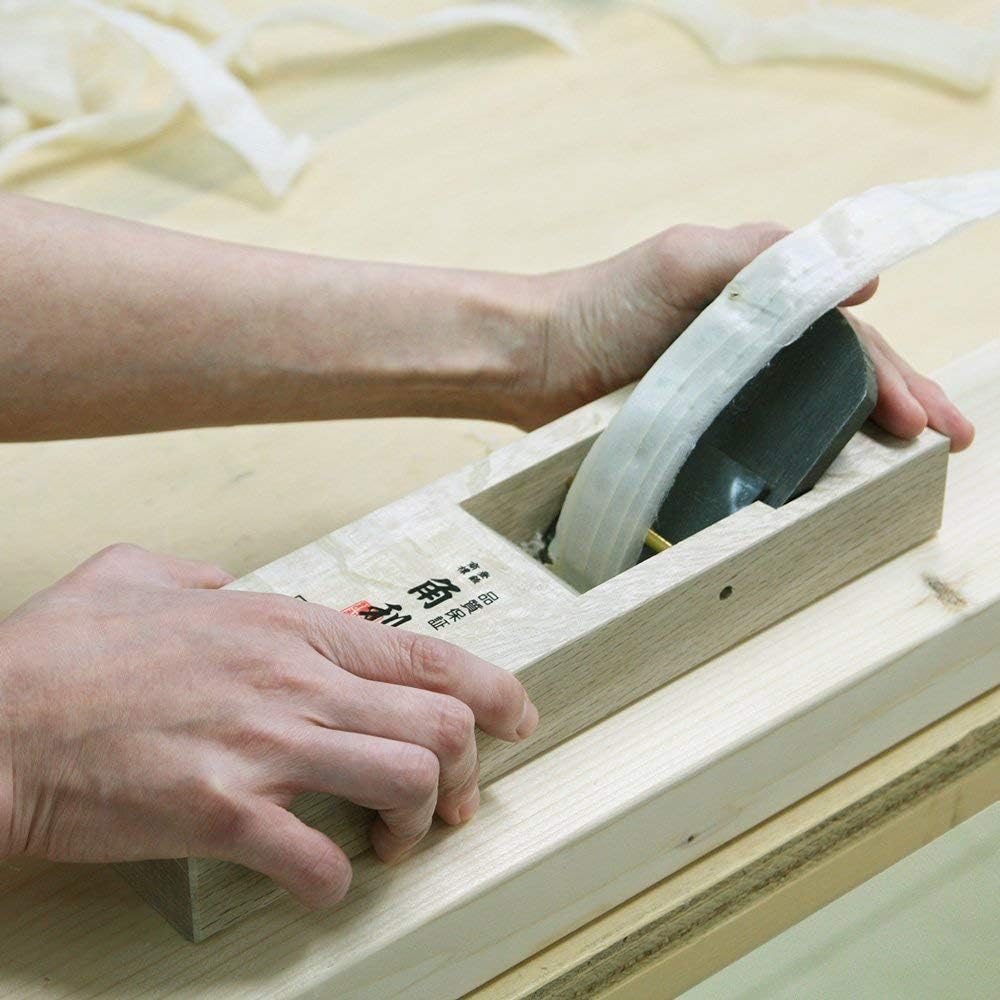
The most fundamental difference between a Japanese kanna and a Western block plane isn’t aesthetic — it’s directional. Western planes push. You stand behind the work, grip the plane body in your palm, and drive it forward. Japanese planes pull. You draw the tool toward your body, typically crouching lower over the work, with the iron presented in what feels like a rearward orientation to Western users.
That single difference cascades through every other design decision.
In a Western plane — say, the Lie-Nielsen No. 60-1/2 low-angle block plane or the Veritas bevel-up design — the body is typically cast ductile iron or bronze, precision-ground flat on the sole, with a cap iron and a mechanical blade-advance system (the depth adjuster and lateral adjuster) that let you dial in blade projection and skew without touching the iron itself. The adjustment is tool-mediated, repeatable, and fast. Woodworkers transitioning from powered tools find Western planes immediately approachable because the adjustment logic is mechanical and legible.
A Japanese kanna is built around a different premise. The body (dai) is hand-fitted white or red oak. The iron — often laminated steel, meaning a hard high-carbon cutting layer forge-welded to a softer backing — sits in the oak body with almost no mechanical hardware at all. You adjust projection by tapping the iron forward with a mallet, and you retract it by tapping the back of the body. There is no wheel to turn, no lateral lever to push. What looks like a simpler system is actually a more demanding one: setup requires a calibrated touch, and maintaining that calibration means the dai itself needs occasional reconditioning as the wood moves with seasonal humidity.
Fine Woodworking’s editorial coverage of Japanese plane technique — across multiple issues addressing hand tool fundamentals — consistently notes that Western woodworkers underestimate the setup curve on kanna. The pull cut, the dai geometry, and the hollow-ground back of the iron (called the ura) are all interdependent. You can’t tune one without understanding the others.
Steel Science: Where the Kanna Has a Real Edge
This is the section where the kanna earns its most legitimate bragging rights.
Traditional Japanese plane irons use hagane (the hard cutting steel, typically white paper steel or blue paper steel — shiro-ko and ao-ko in Japanese designations) forge-welded to a body of softer jigane. Premium Western irons from makers like Lie-Nielsen and Veritas in their A2 or O1 formulations typically fall in the HRC 60–62 range. Japanese laminated irons from respected production makers are commonly described in maker documentation and in Fine Woodworking and Wood Magazine coverage at HRC 63–65, with some premium hagane irons approaching HRC 66–67.
That additional hardness matters for two reasons: edge retention between sharpenings, and the ability to take a finer wire edge. But hardness isn’t the whole story. The flip side is brittleness. A Japanese iron at HRC 65 will take a finer edge than an A2 iron at HRC 60, but it will also chip more readily if you run across a hidden staple, a reversing grain pocket, or a particularly siliceous hardwood species like teak or rosewood.
Budget-Tier Western Block Planes
Entry-level block planes in the $40–$90 range — hardware-store branded tools and imported options sold through home centers — use irons that are rarely spec’d above HRC 58. Edge retention is modest, sole flatness is inconsistent out of the box, and mechanical adjusters are often sloppy. Fine Woodworking’s buyer coverage has historically been direct about this tier: the iron steel is the first thing experienced woodworkers replace. For occasional use on softwood trim, these planes are functional. For any sustained hardwood work, they frustrate more than they serve.
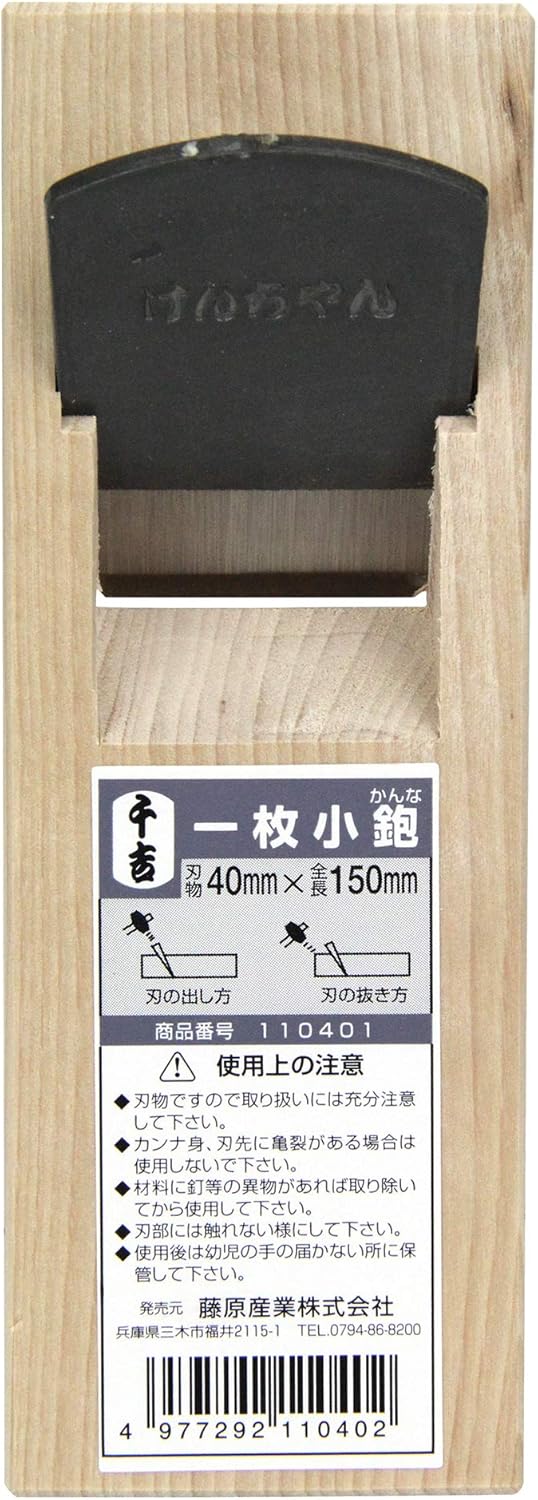
Japanese
$9.99
In stock on Amazon
Check price on AmazonMid-Tier: Production Western Planes and Entry Kanna
The mid-tier is where the market becomes genuinely interesting. The Lie-Nielsen No. 60-1/2 low-angle block plane (around $225 as of 2026) and the Veritas Low-Angle Block Plane ($195–$265 depending on iron selection) both arrive with precision-ground soles, quality A2 or PM-V11 steel, and mechanical adjusters that hold settings reliably. Wood Magazine’s 2024 Handplane Buyer’s Guide identifies both as the primary recommendations for intermediate woodworkers building a hand-tool kit.
On the kanna side, production-tier tools — the Suizan 70mm pull plane and comparable Kakuri offerings available through Japanese tool importers — fall in the $80–$150 range. The irons on these tools are a meaningful step up from hardware-store Western block planes in hardness and edge geometry, and they provide a legitimate introduction to the pull-plane system without the artisan-piece investment.
KAKURI
$23.56
In stock on Amazon
Check price on AmazonPremium-Tier: Artisan Kanna and Specialty Western Irons
At the premium end, the comparison becomes a conversation about purpose as much as performance. Artisan-made Japanese kanna from established makers — sourced through specialty importers like The Japan Woodworker or Tools from Japan — run $300–$500 and above. The irons on these tools are forge-welded by smiths who specialize in plane-iron geometry, and the ura hollow is precisely established. Veritas’s PM-V11 powdered metallurgy steel, described in Veritas’s own published technical documentation as a proprietary alloy engineered for edge retention competitive with harder Japanese irons while resisting chipout, represents the Western answer to the hardness argument. Fine Woodworking’s editorial commentary on PM-V11 since its introduction has consistently positioned it as a meaningful advance for woodworkers who want Japanese-level sharpness without the chipout risk on figured domestic hardwoods.
KAKURI
$57.44
In stock on Amazon
Check price on AmazonErgonomics, Setup, and Total Cost of Ownership
Here’s where the conversation gets more personal — and more shop-specific.
One-Handed Versus Two-Handed Design
Western block planes are designed to be held one-handed. The Lie-Nielsen No. 60-1/2’s palm-swell body fits naturally in the grip, with the blade adjuster under the thumb. That one-handed use case matters enormously for trim carpenters and furniture makers who need to hold a piece in one hand and plane with the other — chamfering a drawer edge, fitting a door hinge mortise, shooting end grain on a small panel. Western block planes own this use case cleanly.
Japanese kanna are typically two-handed tools. You grip the front of the dai with one hand and the rear with the other, pulling the plane toward you with controlled body weight rather than arm strength. Core77’s design editorial feature “The Object Lessons of Japanese Hand Tools” makes the argument that the pull stroke is biomechanically more efficient for sustained work: you recruit your back and core rather than fatiguing your pushing muscles. Long-time kanna users in aggregated commentary across craft publications report less shoulder fatigue during extended flattening sessions, though the learning period is real and non-trivial.
The dai also conforms to your hand differently over time. Oak is a living material; a well-maintained dai that you’ve used for a year fits your grip differently than it did new. That’s either poetic and meaningful or an unnecessary complication, depending on how you feel about tools that require a relationship.
Setup Time and the Learning Curve
A Lie-Nielsen No. 60-1/2 or Veritas Low-Angle Block Plane arrives close to ready to use. You’ll flatten the sole (a quick pass on a flat reference plate with wet-dry sandpaper), hone the iron to your preferred bevel angle, and you’re cutting wood within an hour of unboxing. Ongoing maintenance is sharpening — roughly every 30–90 minutes of active use depending on species and technique — and occasional sole conditioning if the plane has been stored improperly.
A premium Japanese kanna requires more front-loaded setup. The ura (hollow-ground back of the iron) needs to be maintained as you flatten the iron’s back during sharpening; as the hollow wears down, you’ll need to re-establish it at a Japanese waterstone or on a coarse diamond plate. The dai needs periodic flattening to maintain proper blade seating and sole geometry. Popular Woodworking’s coverage of Japanese plane maintenance is frank about the fact that many Western woodworkers set kanna aside after initial frustration, only to return later and find the system profoundly rewarding once the underlying logic clicks.
Sourcing and Retailer Guidance
Authorized premium retailers matter here more than many buyers realize. Highland Woodworking and Tool Nut both stock the full Lie-Nielsen and Veritas lines with proper pre-sale setup guidance. For Japanese kanna, The Japan Woodworker and Tools from Japan are the sourcing channels most consistently cited by the hand-tool craft community for authentic production and artisan-grade irons. Buying a “Japanese plane” from a non-specialist liquidation channel risks getting a poorly hardened iron that neither sharpens well nor holds an edge — the worst of both worlds.
The Decision Framework
Here’s where we land — cleanly, with no hedging.
If you’re a trim carpenter, cabinet installer, or furniture maker who needs a one-handed plane for fitting, chamfering, and detail work: get the Lie-Nielsen No. 60-1/2 or the Veritas Low-Angle Block Plane. You’ll be productive immediately, the mechanical adjustment system suits production tempo, and the A2 or PM-V11 iron will outlast most project schedules between sharpenings.
If you’re a furniture maker or hand-tool enthusiast building a serious practice and you want to understand the full range of what a hand plane can do: invest the setup time in a mid-tier kanna. The Suizan 70mm pull plane is the most frequently recommended entry point in aggregated craft-publication reviews for this exact reader — hard enough to feel the difference from a Western iron, priced low enough that the learning curve doesn’t sting. Give it three months of regular use before judging it.
If you’re buying one plane and one plane only: the Western block plane wins on versatility and immediate usability. The kanna is a second plane, not a first — not because it’s worse, but because it rewards a context of use that takes time to build.
If edge retention in dense hardwoods is your primary criterion: the harder Japanese irons, or a Veritas PM-V11, are the right specification choice. The math on sharpening frequency over a 12-month shop year favors the harder steel meaningfully if you’re smoothing maple or white oak every day.
The best plane is the one you’ve learned to set up correctly. Both traditions reward patience and punish impatience. Pick the one that matches your current working context — and know that serious shops eventually have both.