April 29, 2026 • Daniel Sato • 9 min reading time • Specs verified June 24, 2026
Japanese Oire Nomi Chisels: What the Laminated Steel Design Means for Your Dovetails
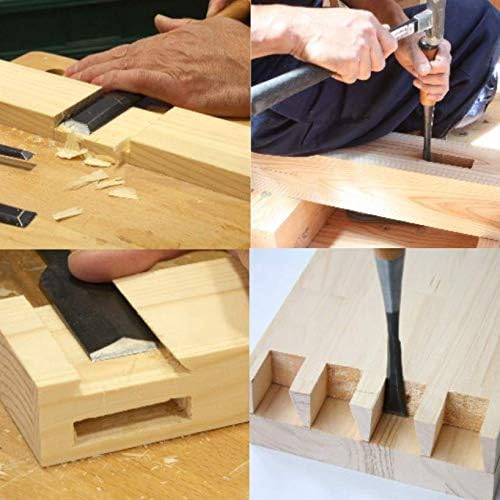
If you’ve ever pared the thin walls of a dovetail socket and had your chisel skate off the line, you already know the problem isn’t always technique — sometimes it’s the tool. A chisel needs to hold a sharp edge long enough for you to work cleanly, and most budget Western chisels, made from a single alloy steel hardened to around 58–60 on the Rockwell C scale (a standardized measure of how hard a metal is, where higher numbers mean more resistance to deformation), simply can’t hold up through a long afternoon of fine joinery. Japanese oire nomi — the term just means “bench chisel” in Japanese, oire referring to the hollow-back style with a hooped handle — take a fundamentally different approach. They’re built from two layers of steel forge-welded together: a hard cutting edge of high-carbon steel bonded to a softer iron or mild steel body that absorbs shock. That construction, laminated steel, is worth understanding before you spend $200–$900 on a set. This article walks you through exactly what it means for your work, what to look for when comparing sets, and how to decide which tier of chisel matches where you are right now.
What Laminated Steel Actually Does — and Why It Matters for Precision Work
The laminated construction isn’t decorative. It solves a materials problem that’s been in the toolmaker’s way for centuries: extremely hard steel — the kind that holds a truly sharp edge through dozens of paring cuts — is also brittle. Hit it wrong with a mallet, or torque it sideways into a tight socket, and a mono-steel chisel at 65 Rockwell C will chip or even crack.
The Japanese solution was to use that ultra-hard steel only where you need it: a thin layer of hagane (cutting steel, typically white steel or blue steel — more on those in a moment) forge-welded to a body of jigane (soft wrapping iron). The soft body flexes and absorbs impact. The hard edge does the cutting. According to Fine Woodworking’s buyer’s guide on Japanese chisels, this construction allows the cutting edge to be hardened to 62–65 Rockwell C — measurably harder than the 58–60 Rockwell C you’ll see on most quality European bench chisels. That extra hardness translates directly into edge retention: you’re taking more shavings between sharpenings.
For dovetails specifically, this matters in two ways. First, paring to a scribed baseline requires light, controlled cuts where the chisel must track exactly where you push it — a dull edge wanders. Second, chopping across end grain to clear a socket puts lateral stress on the blade. The laminated body handles that shock without flexing the cutting edge, which stays geometry-true.
The hollow back — the concave face you’ll see on the flat side of any oire nomi — serves a related purpose. It means you’re only flattening a thin rim of steel on the back face when you sharpen, rather than lapping an entire flat surface. Sharpening is faster and easier to keep accurate.
White Steel vs. Blue Steel: The Decision You’ll Actually Face at the Retail Counter
When you start browsing sets from Japanese-tool specialists — retailers like Highland Woodworking, Woodcraft, and Tool Nut carry a solid range — you’ll see two steel designations that control the price tier more than almost anything else.
Shirogami (White Steel) is a simple, high-purity high-carbon steel. It sharpens quickly to a very fine edge, takes a polish that’s almost mirror-bright, and is beloved for hand-tool work where you’re touching up the edge frequently at a waterstone. The tradeoff: it’s less resistant to rust and to edge micro-chipping in abrasive wood species. Popular Woodworking’s overview of Japanese tool steel notes that white steel’s low alloy content is precisely why it sharpens so readily — there’s nothing in the way.
Aogami (Blue Steel) adds chromium and tungsten to the mix. It’s slightly harder to sharpen than white steel — you’ll feel it take a moment longer to raise a burr — but it holds that edge longer, particularly in resinous hardwoods or when you’re working for an extended session without touching up. Blue Steel #2 is the most common version in mid-range chisels; Blue Steel #1 (sometimes called Blue Super) appears in higher-end sets and takes the hardness even further.
By the numbers:
| Steel Type | Typical Rockwell C | Alloy Additions | Relative Sharpening Speed |
|---|---|---|---|
| White Steel #1 | 62–65 | None significant | Fastest |
| Blue Steel #2 | 63–65 | Cr + W | Moderate |
| Blue Steel #1 / Super | 64–66 | Cr + W + V | Slowest but longest-lasting edge |
For a woodworker doing fine furniture joinery and already comfortable at a waterstone, white steel is a genuine joy — the sharpening ritual is quick and the edge goes frighteningly sharp. For a cabinet shop owner running production dovetails all day who wants more time between sharpenings, blue steel makes commercial sense. The Core77 editorial on Japanese craft tools in Western workshops makes exactly this point: the steel selection is a workflow decision, not a quality hierarchy.
Reading a Set: What Separates a $200 Introductory Set from a $700 Craftsman-Grade Set
The handles and hoops are where a lot of the price difference lives, and they’re worth understanding before you assume you’re just paying for a name.
Oire nomi handles are traditionally made from white oak (shirogashi) or red oak, and the steel hoop at the top of the handle — struck with a hammer or mallet — is what keeps the wood from splitting over years of use. On entry-level sets, hoops are rolled and welded. On better sets, they’re forged and fitted to the handle with enough precision that the handle swells into the hoop as the wood takes on moisture from use, creating a mechanical lock. Over a working lifetime, that difference shows.
The ferrule at the blade end matters too. It should be seated flat and tight — any gap between ferrule and handle is a point where the handle will eventually crack under mallet work.
Blade geometry also diverges across price tiers. Reviewers at Fine Woodworking and tool enthusiasts documented in Wood Magazine’s chisel comparison consistently note that mid-range Japanese chisels often arrive with blade backs that need meaningful lapping before the first use — the hollow is correct but the rim needs refinement. Premium sets from makers like Tasai, Iyoroi, or Koyamaichi arrive closer to ready, with backs requiring only a few passes to confirm flatness rather than a full flattening session. That’s not a trivial difference if you’re buying a seven- or ten-piece set.
A practical decision frame by price tier:
-
$150–$250 (introductory sets, e.g., Fujihiro or equivalent): Sound laminated construction, white or blue steel, handles that work. Backs will need lapping. Good for someone transitioning from Western chisels who wants to understand the format before committing further.
-
$300–$500 (mid-range sets, e.g., Suizan, Okimax, or similar): Better heat treatment consistency across the set, improved handle-to-hoop fit, often closer to work-ready out of the box. The right tier for a serious hobbyist or small-shop professional.
-
$600–$900+ (craftsman-grade, e.g., Tasai, Koyamaichi): Hand-forged by named smiths, higher steel purity, handles fitted with care. Backs are closer to lapped. Resale value holds well — the Japan Woodworker catalog notes that named-smith chisels retain value across decades when cared for properly. This tier is a long-term tool decision, not an equipment purchase.
Sharpening System Compatibility: Don’t Buy the Chisels Without a Plan for the Backs
This is the tradeoff nobody mentions loudly enough in the buying process. The hollow back that makes oire nomi so easy to flatten also means the geometry must be maintained — you can’t just run the back flat on a coarse diamond plate the way you might with a Western chisel, because you’d risk removing the hollow entirely. The correct approach is to work the back on a flat waterstone, maintaining contact only at the rim, letting the hollow float free.
That means you need a flat waterstone — a quality 1,000-grit and 6,000-grit combination is the standard starting point — and you need it genuinely flat. A dished waterstone will round the back and defeat the purpose of the hollow entirely. If you’re already running a Norton or Shapton waterstone setup, you’re positioned well. If you’ve been using sandpaper on glass or a set of diamond plates exclusively, plan for that additional investment. A quality 1,000/6,000 combination stone runs $60–$120; adding a flattening plate brings the sharpening system cost to roughly $90–$150 before you touch the chisels.
Total-cost-of-ownership math: a $300 set of oire nomi plus a $120 sharpening setup is a $420 system purchase. That context matters when you’re comparing against a $280 set of Lie-Nielsen bench chisels (Western-style, also excellent) where your existing flat diamond plates work fine.
Where to Buy — and Why the Retailer Matters for This Category
Japanese chisels are a category with meaningful counterfeit and gray-market risk on mass-market platforms. Tools sold as “hand-forged” with no smith attribution and suspiciously uniform pricing are almost certainly machine-ground imports with a surface finish designed to look like forge scale. The laminated construction can be faked visually — the lamination line is sometimes etched on rather than structural.
Buying through authorized specialty retailers dramatically reduces this risk. Highland Woodworking, Woodcraft’s premium catalog, and Tool Nut stock verified sets with maker attribution. The Japan Woodworker (now operated through select distributors) has historically been the authoritative source for named-smith sets in North America. Ask the retailer specifically whether the set is from a named smith or a production line — a legitimate retailer will know the answer.
The Clear Decision Rule
Here’s how to frame your choice:
If you’re cutting fine joinery — dovetails, mortise-and-tenon work, fitting drawer bottoms — and you’re already comfortable maintaining an edge at a waterstone, an oire nomi set will give you a measurable improvement in how long your edge lasts between sharpenings. Start at the $250–$400 tier, choose blue steel #2 if you want forgiveness, white steel if you love the sharpening ritual.
If you’re not yet set up for waterstone sharpening, buy the sharpening system first, spend two months with it on your current chisels, and then revisit. The chisels will reward the investment more when the foundation is in place.
If you’re running production volume and edge retention is a commercial decision, named-smith blue steel sets at the $600+ tier are defensible on a cost-per-edge calculation — particularly when you factor in that these tools, properly maintained, will still be in your shop twenty years from now and can be resold at a meaningful fraction of purchase price. That’s a case you can make to yourself and to your shop budget in the same breath.
The laminated construction isn’t marketing. It’s an engineering solution that’s been refined over centuries, and when you’re paring to a scribed line on a hand-cut dovetail, you’ll feel exactly what all of that refinement was for.