May 19, 2026 • Daniel Sato • 9 min reading time • Specs verified June 24, 2026
Low-Angle Block Planes and the Geometry Decisions That Separate Good from Great
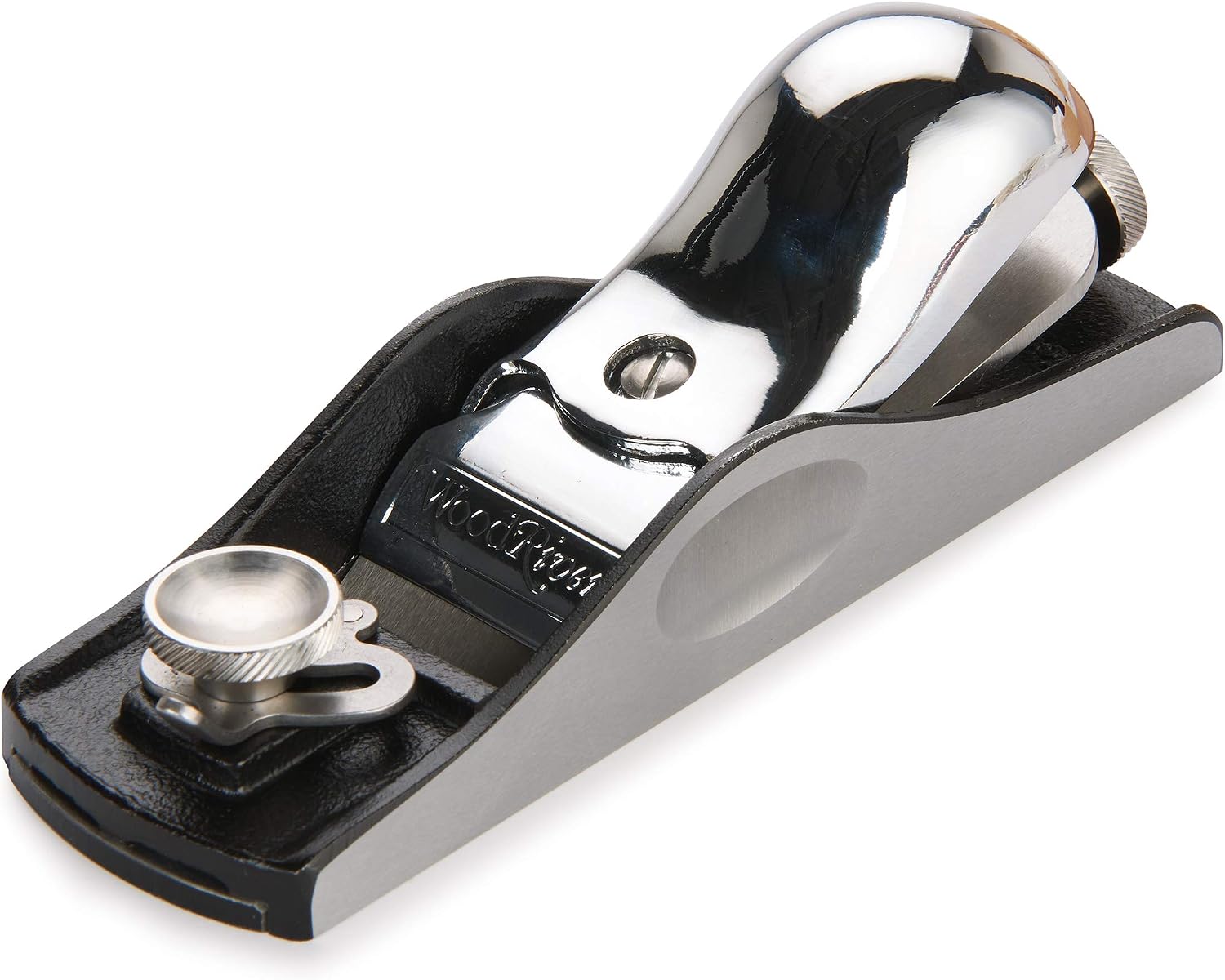
If you’ve never used a hand plane before, here’s the short version: a block plane is a small, single-handed cutting tool — roughly the size of a TV remote — that woodworkers use to shave thin slices off wood surfaces. The blade (called the iron) sits inside a metal body at a fixed angle, and that angle is the whole game. A low-angle block plane positions the blade closer to horizontal than a standard model, which changes how the cutting edge attacks the wood fiber. The result is a tool that excels at trimming end grain — the stubborn, cross-cut face you see at the end of a board — and producing glass-smooth surfaces on delicate materials like figured maple or thin veneers. This guide breaks down the geometry decisions that make one block plane worth $55 and another worth $350, and gives you a clear framework for deciding which one belongs in your shop.
| EDITOR'S PICK[Woodriver Low Angle Block Plane](https://www.amazon.com/dp/B003VR65M6?tag=greenflower20-20)… | Mid-tier[KAKURI Japanese Block Plane Lar](https://www.amazon.com/dp/B00UD1M5I6?tag=greenflower20-20)… | Budget pick[KAKURI Japanese Hand Plane 42mm](https://www.amazon.com/dp/B000ALF4GO?tag=greenflower20-20)… | |
|---|---|---|---|
| Type | Western low-angle | Japanese Kanna | Japanese Kanna |
| Blade Width | — | 60mm | 42mm |
| Body Material | — | White Oak | ECO Oak |
| Adjustable Mouth | ✓ | — | — |
| Dimensions | — | 10.2 x 3.0 x 2.8 in | 5.9 x 2.1 x 1.6 in |
| Price | $126.98 | $57.44 | $23.56 |
| See on Amazon → | See on Amazon → | See on Amazon → |
Why Bedding Angle Is the First Number to Know
Every block plane has a bed angle — the angle at which the iron rests inside the plane body, measured from horizontal. In a standard block plane, that’s typically 20°. In a low-angle block plane, it drops to 12°.
Here’s why that matters: the effective cutting angle — the angle at which the bevel actually meets the wood — is the sum of the bed angle plus the bevel angle ground onto the iron. A typical iron comes factory-ground at 25°. On a standard block plane (20° bed), your effective cutting angle is 45°. On a low-angle block plane (12° bed), it drops to 37°.
That 8-degree difference is not subtle. Lower effective angles cut end grain more cleanly because end grain fibers are oriented differently from face grain — they need to be sheared, not pushed. A steeper angle tends to compress and crush those fibers before the edge gets through them. Popular Woodworking’s overview of plane geometry notes that the low-angle setup “essentially allows the bevel to do most of the work, producing a slicing action that long-grain planes can’t replicate.”
The trade-off is that low-angle geometry is less forgiving on difficult, reversing, or highly figured grain — where a higher effective angle (sometimes called a high cutting angle or York pitch, around 50–55°) actually reduces tearout by forcing fibers to break closer to the surface rather than ahead of the cut. This is where interchangeable-iron systems like the Veritas Low-Angle Block Plane earn their keep: you can swap in a back-bevel iron ground at 38° to create a 50° effective angle from the same 12° bed, giving you one body that covers multiple cutting scenarios.
The Numbers That Separate Tiers of Quality
Before comparing specific tools, here’s the spec snapshot worth memorizing:
By the numbers
| Spec | Budget tier (~$40–$80) | Mid-range (~$120–$200) | Premium (~$280–$400+) |
|---|---|---|---|
| Bed angle | 20° (often labeled “low-angle” loosely) | 12° true low-angle | 12° true low-angle |
| Iron thickness | 2.0–2.4 mm | 2.8–3.2 mm | 3.5–4.0 mm+ |
| Mouth adjustability | Fixed | Adjustable | Precision-adjustable, tool-free |
| Lateral adjustment | Absent or fiddly | Lever or wheel | Wheel with positive detent |
Iron thickness is the second number that separates the tiers, and it’s underappreciated by first-time buyers. A thicker iron resists chatter — the micro-vibration that creates faint ridges on the surface of your work. Lie-Nielsen’s published specifications show their No. 60-1/2 iron at a full 3/16 inch (approximately 4.8 mm), which is nearly double the iron in a standard hardware-store block plane. Owners across long-run reviews consistently note that this mass is what produces the glassy cuts that feel almost effortless compared to thinner irons.
Mouth Geometry: The Adjustment You’ll Actually Use Every Week
The mouth of a plane is the gap between the front edge of the opening in the sole and the cutting edge of the iron. A tight mouth supports the wood fiber directly in front of the cut, which reduces tearout. A wide mouth clears shavings more easily and is faster to set up.
For finish work — fitting a cabinet door, trimming a mitered frame — you want a tight mouth. For rough stock removal, a wider mouth keeps shavings from jamming. Budget planes give you one mouth setting from the factory. Premium planes let you tune it.
The Veritas Low-Angle Block Plane uses a sliding front section of the sole that adjusts with a knurled knob — it takes about ten seconds to shift from a tight mouth for a final cleanup pass to a wider setting for chamfering. Lee Valley’s 2025 catalog documentation puts the adjustment range at 0–0.040 inches, which in practice covers everything from paper-thin shavings on figured wood to aggressive chamfering work. Lie-Nielsen’s No. 60-1/2 also offers a fully adjustable mouth via a separately cast front section that locks positively once set.
Where budget tools consistently fall short — as noted in Fine Woodworking’s block plane comparison — is in mouth consistency after adjustment: the gap can shift as you tighten the locking mechanism, meaning what you set is not quite what you get. Premium castings with tighter tolerances eliminate this. It’s a small thing until you’ve ruined a door fitting because the mouth drifted.
Steel, Heat Treatment, and What the Price Gap Is Actually Paying For
Iron quality is arguably where the money matters most, and it’s also the least visible to the eye at the point of purchase.
Premium planes from Lie-Nielsen ship with irons made from A2 tool steel, a high-carbon, air-hardened alloy that holds an edge longer than the O1 carbon steel common in budget tools. Veritas, interestingly, ships their block planes with PM-V11 steel — a powdered-metal alloy they developed in house — which independent reviewers at Fine Woodworking have noted holds an edge roughly 25–50% longer than A2 in controlled sharpening-cycle comparisons. The trade-off is that PM-V11 requires slightly more effort at the coarse end of sharpening (setting the initial bevel), but the extended interval between sharpenings makes it a strong value proposition for production use.
Budget irons are typically made from medium-carbon steel hardened to around 58–60 HRC (Rockwell Hardness C scale). Premium irons sit at 60–63 HRC. That difference translates directly to how many board-feet of end grain you can mill before the edge softens. Wood Magazine’s 2024 buyer’s guide puts it plainly: a quality A2 or PM-V11 iron may cost $40–$60 as a spare or upgrade part, but it can double the interval between sharpenings — relevant if sharpening is a production bottleneck.
One often-overlooked detail: the flatness of the back of the iron out of the box. The back must be lapped flat (polished absolutely level) before the plane will cut cleanly, because it forms one half of the cutting edge geometry. Budget irons frequently have hollows or machine marks that require 20–40 minutes of work on a sharpening stone before first use. Lie-Nielsen and Veritas irons consistently arrive flat enough for most users to hone only the last quarter inch on the finest stone and go straight to work. Owners across forum reviews and long-run write-ups describe this as a meaningful difference in setup time.
Comparing the Field: Where to Put Your Money
Let’s name the realistic decision points.
If you’re doing occasional trim work and home shop joinery and your budget is under $100, the Stanley 12-960 (sometimes catalogued as the Stanley Sweetheart Low-Angle Block Plane) represents a reasonable entry. It’s a genuine 12° bed, not a mislabeled standard, and the iron, while not premium steel, is serviceable for softwoods and easy hardwoods. Reviewers at toolguyd.com note that the mouth adjustment is functional but requires a driver rather than a tool-free knob — a minor friction in everyday use.
If you’re a furniture maker, finish carpenter, or cabinet shop owner spending real time on end grain and fitted joinery, the decision narrows fast. The Veritas Low-Angle Block Plane (around $175–$195 at retailers like Lee Valley and Tool Nut as of spring 2026) and the Lie-Nielsen No. 60-1/2 (around $275–$315 at Highland Woodworking, Acme Tools, and direct from Lie-Nielsen) are the two planes that come up consistently in professional-level comparisons. Both are made in North America — Veritas in Ottawa, Lie-Nielsen in Warren, Maine — with fully machined castings and premium irons.
The decision between them comes down to a genuine trade-off:
- Veritas offers a more adjustable system (the Norris-style adjuster controls both depth and lateral movement simultaneously), the PM-V11 iron, and slightly lower entry cost. The knurled knobs and bead-blasted finish feel modern and precise.
- Lie-Nielsen offers a more traditional feel with discrete depth and lateral adjusters, a noticeably heftier casting, and an aesthetic that many woodworkers find more satisfying to use over long sessions. The extra mass reduces chatter in a way that spec sheets don’t fully capture — owners consistently describe a damping quality in the cut that feels different from lighter planes.
Neither is objectively better. They solve the same problem from slightly different design philosophies. If you’re already in the Veritas ecosystem (marking gauges, shoulder planes), the bevel-up iron compatibility across their low-angle line is a practical advantage. If feel and long-term relationship with a tool matters to you — and for this audience, it often does — the Lie-Nielsen’s machined ductile iron and lifetime guarantee tend to win on that dimension.
The If/Then Decision Rule
Here’s how to frame the final call:
- If you do trim carpentry or site work where a plane gets knocked around: the Veritas is the better choice — its ductile iron body handles abuse, and the PM-V11 iron resists edge damage from incidental grit better than A2.
- If you do fine furniture, fitted cabinetry, or hand-tool-forward woodworking where tactile feedback and long-term ownership matter: budget toward the Lie-Nielsen No. 60-1/2. The extra $80–$100 over the Veritas pays for mass, fit, and a manufacturing heritage that holds resale value well if you ever need to liquidate.
- If you’re stepping up from a hardware-store block plane for the first time and aren’t sure which workflow you’ll land in: start with the Veritas. Its adjustability makes it more forgiving as you calibrate your technique, and the iron upgrade path (Veritas sells spare PM-V11 irons at reasonable cost) means you’re not painting yourself into a corner.
The geometry decisions in a block plane — bed angle, mouth adjustability, iron thickness, and steel spec — aren’t abstract engineering trivia. They’re the reasons one plane leaves a surface you can go straight to finishing and another leaves one you have to sand. Know the numbers, handle a few planes at a dealer if you can, and let the work you actually do drive the choice.