June 16, 2026 • Daniel Sato • 10 min reading time • Specs verified June 24, 2026
From Ductile Iron to Premium Steel: How Bench Plane Body Materials Shape Every Cut
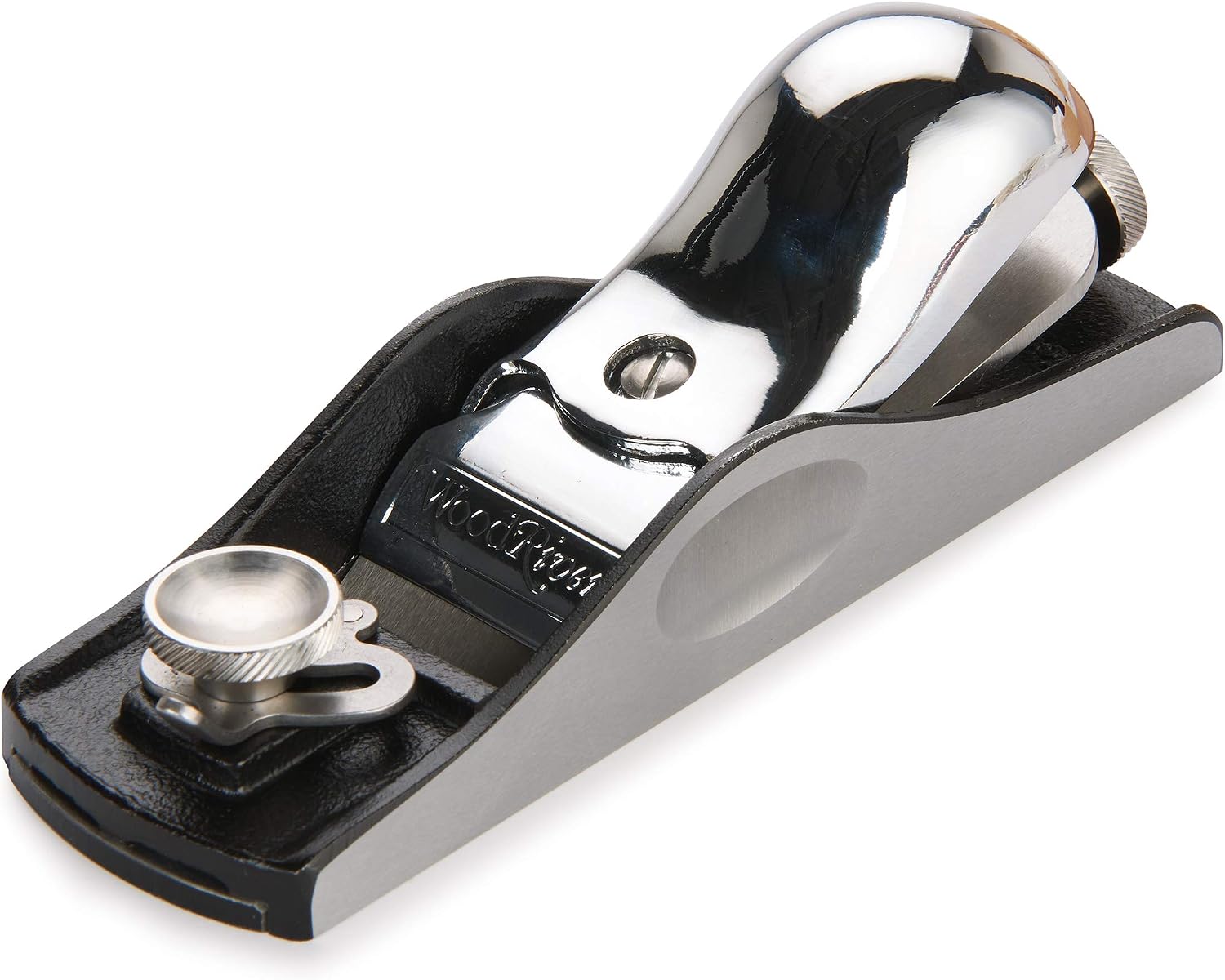
A bench plane is, at its core, a very simple idea: a sharp blade clamped into a rigid body, pushed across wood to shave a thin layer from the surface. But spend ten minutes comparing a $40 import to a $400 Lie-Nielsen, and you’ll quickly sense that something is profoundly different — not just in price, but in how the tool feels, how precisely it can be set, and whether it’ll still be cutting clean shavings twenty years from now. That difference lives almost entirely in materials and manufacturing. The body casting, the blade steel, the way the frog (the internal platform that holds the blade at the correct angle) is machined — these are the design decisions that separate a plane you fight against from one that almost thinks for you.
If you’re stepping up from a starter plane or you’re about to put real money into a hand tool setup, this guide will give you a decision framework rooted in what actually matters: body alloy, blade metallurgy, fit and finish tolerances, and total cost of ownership. We’ll name the tradeoffs, show the math where it helps, and end with clear “if X, then Y” rules so you can commit with confidence.
Why the Body Casting Is the Foundation of Everything
The body of a bench plane — the sole, the sides, the bed where the frog sits — has to do three things simultaneously: stay perfectly flat, resist vibration during the cut, and hold its geometry over years of temperature cycling and shop stress. The material it’s cast from determines how well it does all three.
Gray cast iron is the traditional choice and still the dominant material across the mid-range and premium market. It has excellent vibration-damping characteristics (foundry engineers call this internal damping capacity), machines to very flat surfaces, and — critically — doesn’t deflect under the lateral pressure of a hard cut. Stanley’s classic Sweetheart-era planes and the entire Lie-Nielsen lineup use gray iron. The tradeoff is brittleness: drop a gray iron plane on a concrete floor and you may crack the tote boss or chip the heel. It’s not fragile in use, but it punishes accidents.
Ductile iron (also called nodular iron) modifies gray iron’s microstructure during casting by introducing magnesium, which causes the graphite to form spheres rather than flakes. The result is dramatically higher impact toughness — closer to mild steel — while preserving most of the damping and machinability advantages. Many imported planes at the $80–$180 price point use ductile iron. Fine Woodworking’s hand plane buyer’s guide notes that ductile iron bodies, when properly stress-relieved after casting, can hold their flatness reliably; the problem at the budget end isn’t usually the alloy itself, it’s whether the manufacturer bothers with stress relief and precision grinding.
Billet steel bodies — machined from solid bar stock rather than cast — appear in a small number of specialty planes, including some Veritas models. Steel offers the highest dimensional stability and impact resistance, but it’s expensive to machine, heavier than equivalent iron castings, and offers less vibration damping. For most bench-plane applications, a well-made iron casting outperforms steel; billet construction makes more sense for small block planes and shoulder planes where casting thin sections is difficult.
Aluminum and polymer bodies appear at the entry level and in a few specialty categories (some Japanese-style planes, certain block planes). Aluminum doesn’t damp vibration well and deflects under heavy cuts; polymer is worse. Neither is appropriate for a serious bench plane investment.
By the Numbers: Body Material Comparison
| Material | Vibration Damping | Impact Toughness | Machinability | Typical Price Tier |
|---|---|---|---|---|
| Gray cast iron | Excellent | Low (brittle) | Very good | Mid → Premium ($120–$500+) |
| Ductile iron | Good | High | Good | Budget → Mid ($40–$200) |
| Billet steel | Fair | Excellent | Expensive | Specialty ($300–$600+) |
| Aluminum | Poor | Moderate | Excellent | Entry / Block planes |
The Blade Is Where the Design Rubber Meets the Road
The body matters enormously, but experienced planemakers will tell you the blade — called the iron in traditional hand-tool language — is where you’ll feel the difference most directly in daily work. Two variables dominate: steel alloy and heat treatment.
A2 tool steel became the default premium blade specification through the 1990s and 2000s. It’s an air-hardening die steel that reaches Rockwell C hardness around 60–62 HRC in typical plane-iron heat treatment, resists wear well, and holds an edge through hardwoods without the chipping risk of more brittle alloys. Lie-Nielsen specs their irons at A2 (cryogenically treated) as standard. The tradeoff with A2 is that it’s harder to sharpen than softer steels — it pushes back against your stones — though this is actually a feature in production use where you want longer intervals between sharpenings.
O1 tool steel is the old-school choice and still Lie-Nielsen’s alternative offering for many planes. Oil-hardening, typically 60–62 HRC, easier to get razor-sharp than A2, but edge retention is modestly shorter in abrasive or resinous woods. Popular Woodworking’s coverage of plane-iron steels has consistently noted that skilled hand-tool workers often prefer O1 for the sharpening feel alone — there’s a tactile feedback through fine waterstones that A2 doesn’t quite replicate. For furniture work in primarily domestic hardwoods, the performance gap between A2 and O1 is smaller than the marketing would suggest.
PM-V11 (powder metallurgy vanadium steel) is Veritas / Lee Valley’s proprietary alloy, and per their published white papers, it achieves approximately 61 HRC while offering edge retention measurably longer than A2 in their internal comparative testing. The powder metallurgy process creates a finer, more uniform carbide distribution than conventional alloys — the metallurgical mechanism that allows higher hardness without the brittleness penalty. Toolguyd’s coverage of the PM-V11 launch noted significant enthusiasm from professional hand-tool users who reported fewer touch-ups between full sharpenings. It’s genuinely difficult to argue against PM-V11 for anyone who planes a lot of figured or interlocked-grain wood.
HSS (high-speed steel) blades appear as aftermarket upgrades for older Stanley-pattern planes. They hold edges exceptionally long but are noticeably harder to sharpen and require diamond or CBN abrasives. For a practitioner who already has waterstones set up, HSS is usually overkill and adds friction to the sharpening workflow.
The heat treatment matters as much as the alloy. A correctly heat-treated O1 iron will outperform an improperly treated A2 iron every time. Budget plane makers routinely under-harden blades to reduce warranty returns from chipping — you’ll know it’s happened when an iron that feels soft on the stones also loses its edge after twenty minutes of use. Wood Magazine’s bench plane comparisons have repeatedly flagged this as the most consistent quality gap between $60 imports and $300+ precision planes.
Frog Geometry, Mouth Width, and Why Tolerances Are Worth Paying For
Once you’ve accepted that body alloy and blade steel matter, the next conversation is fit: how precisely do the components mate, and what does precision actually buy you?
The frog is the angled platform inside the plane body on which the blade assembly rests. It determines the blade’s cutting angle (typically 45° on a standard bench plane, the so-called “common pitch”) and, critically, how much the blade chatters under load. A frog machined to tight tolerances — full surface contact with the body casting, no rocking, no gaps — transfers cutting forces directly to the mass of the plane body. A frog with high spots, gaps, or rough mating surfaces creates a micro-deflection pathway that shows up as chatter marks in the finished surface of your workpiece.
Lie-Nielsen’s published manufacturing standards specify that their frogs are ground (not just cast or milled) for flatness. Veritas takes a different approach with their bevel-up jack and smoother designs, eliminating the frog entirely and seating the blade directly in a machined bed. Both solutions achieve the same goal — maximum contact, minimum vibration pathway — through different design logic.
The mouth of the plane (the opening in the sole through which the blade protrudes) also matters for finish quality. A tight mouth — say, 0.010 to 0.020 inches — prevents wood fibers ahead of the blade from tearing out before they’re cut, which is why tight-mouth planes are standard for final smoothing passes. The problem is that tight-mouth planes are also more prone to clogging with thick shavings. A plane designed for heavy stock removal (a No. 5 jack plane, for example) benefits from a wider mouth that clears shavings freely. Most quality planes allow mouth adjustment; budget planes with fixed mouths force a compromise.
Total Cost of Ownership: The Math That Justifies Premium
This is where a lot of intermediate buyers stall out — the sticker shock of a $375 Lie-Nielsen No. 4 smoother versus a $90 import that looks superficially similar. The TCO frame resets the comparison.
A quality gray iron plane with an A2 or PM-V11 blade, maintained properly, has a realistic service life measured in decades. The resale market for Lie-Nielsen and Veritas planes is active and well-priced; a Lie-Nielsen No. 4 purchased today at retail retains roughly 60–75% of its value if resold in clean condition, based on aggregated pricing observed across premium woodworking retailer marketplaces and community forums. The $90 import has minimal resale value and is likely to need a replacement blade within a year of serious use.
Quick TCO math:
- Premium plane at $375, resale value after 5 years: ~$250. Net cost: $125 over 5 years = $25/year
- Budget plane at $90, replacement blade at $30, resale value ~$20. Net cost: $100 over 5 years = $20/year — but with a tool that fights you every day
The math is tighter than it looks, but it ignores the productivity cost of a plane that chatters, clogs, and requires constant fettling. For a hobbyist with unlimited patience, the budget plane is a viable learning tool. For anyone making furniture for clients or production pieces where time is money, the premium plane pays for itself in the first year.
If X, Then Y: Your Decision Rules
If you’re flattening rough lumber and don’t need a refined surface: A ductile iron plane with a properly heat-treated O1 or A2 iron at the $120–$200 price point (Woodriver, WoodRiver No. 5, or equivalent) is a legitimate working tool. The body alloy is fine for this application; invest your upgrade budget in a quality sharpening setup instead.
If you’re doing final smoothing on furniture or cabinet work: Don’t compromise on the body casting or the iron. A Lie-Nielsen No. 4 or No. 4½ (gray iron, A2 or O1) or a Veritas bevel-up smoother (PM-V11) is the call. Both are stocked by Highland Woodworking, Tool Nut, and Acme Tools in the full professional configuration.
If your primary constraint is sharpening time: Choose PM-V11 (Veritas) for the longest edge retention and accept the slightly higher buy-in. If you enjoy the sharpening ritual and work primarily in domestic hardwoods, O1 will serve you better tactilely.
If you’re building a first serious hand-tool kit: Start with the No. 4 or No. 4½ smoother in premium spec — it’s the plane you’ll use most and the one where quality delivers the most tangible daily return. Add a No. 5 jack plane second, and don’t overthink the body material there; a well-fettled mid-range jack does the same job as a premium one for stock removal.
The planes that matter most to your finished work are the ones you use at the end of the process, when the surface is almost done. Put the premium materials where the premium result is visible. That’s the principle the best toolmakers have always built to — and it’s the principle that should guide where you spend.